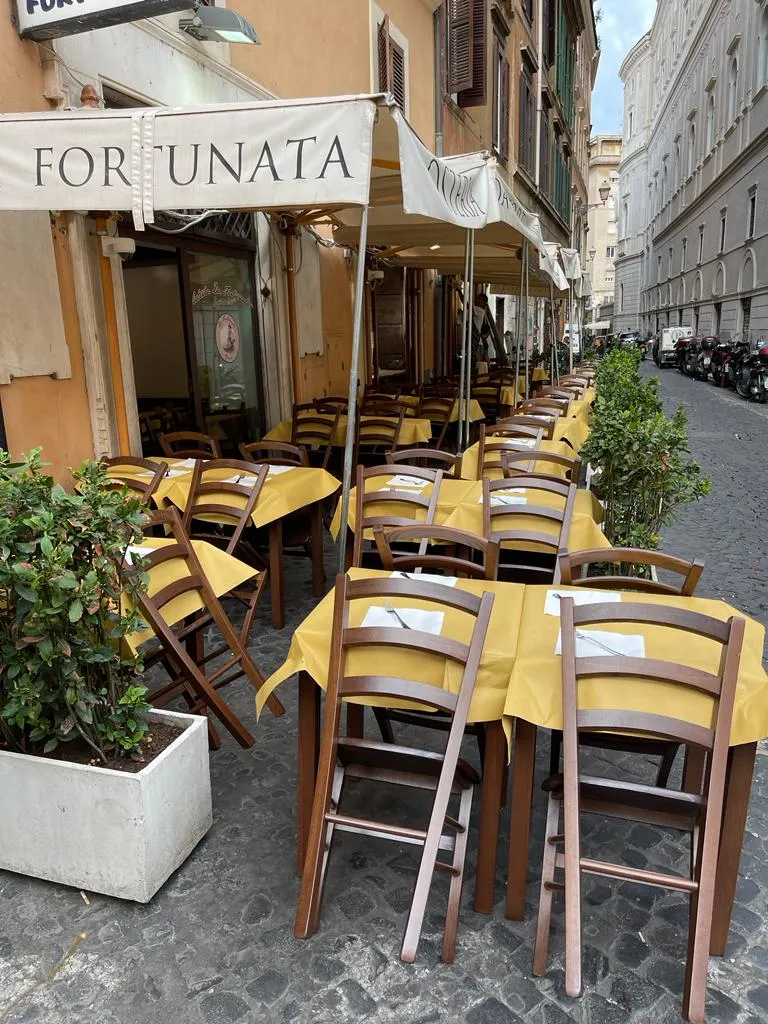
The story
Handmade pasta is the heart of Osteria da Fortunata, a chain of Roman trattorias that Gambero Rosso calls “a true Roman institution.” Dishes like scialatielli all’amatriciana, coda alla vaccinara, and cacio e pepe are “executed with passion and skill” in a lively, welcoming atmosphere, with pasta made daily in their own laboratory and ingredients sourced from local producers. The open kitchen and counter seating reinforce the craft.
Giovanni Fois notes that while this is a highly-rated spot for traditional Roman fare—singling out carbonara, amatriciana, coratella, and starters like olive ascolane and supplì—service can be slow during peak hours. For unabashedly authentic Roman cuisine in a family-friendly setting, da Fortunata delivers warmth and quality; just bring patience at busy times.
Synthesised by AI from every creator’s review. First reviewed 2025.
What diners say
Synthesized from 41 Google reviews · tap an aspect for the detail
Diners consistently praise the fresh, handmade pasta and classic Roman dishes, especially carbonara and tiramisu. The lively atmosphere and the chance to watch pasta being made add to the experience. While many find the food excellent, a few feel the prices are high for the portion size.
Food quality
The fresh, handmade pasta is a highlight, with carbonara frequently singled out as exceptional. Tiramisu and meatballs also receive high marks. Diners describe the food as delicious and authentic.
Service
Staff are repeatedly described as friendly, attentive, and helpful. Several reviewers mention specific servers by name for their warm and efficient service. The team's ability to accommodate non-Italian speakers is also appreciated.
Atmosphere
The open kitchen where pasta is made fresh is a popular feature, adding to the dining experience. The restaurant's location near Piazza Navona is convenient, and the lively vibe is well-received.
Value
While many find the food worth the cost, some diners feel the prices are high relative to portion sizes. The overall consensus is that it is a premium experience.
Wait time
The restaurant can be very busy, and those without reservations may face a wait. Reviewers recommend booking ahead to avoid delays. The payment process can also be slow due to individual checks.
Most-loved dishes
AI summary of what 13 dish mentions say about the food
The supplì is the standout, a crispy, molten rice ball that earns unanimous praise. Reviewers describe the food as rustic, hearty, and deeply satisfying, capturing the soul of Roman comfort cooking.
“The supplì here are interesting and worth trying. They're a good antipasto, and I'd recommend them.”
What creators say
5 creators have covered Osteria da Fortunata. Most active: Gambero Rosso, Giovanni Fois
Osteria da Fortunata in Rome, a highly-rated traditional Roman restaurant, offers handmade pasta and classic dishes, though service can be slow during peak times.
Dishes mentioned
Olive ascolane
The olive ascolane are good — a nice antipasto to start with.
- Supplì
- Cacio e Pepe
Carbonara
The carbonara here is good — the ingredients are fresh, the pasta is handmade, and the guanciale is tasty. But I think the guanciale is cut too thin; I prefer it thicker and crunchier. Also, it's missing a bit of pecorino cheese — I'd add another half spoonful. Overall, it's a 7 out of 10 for me. The flavors don't quite come together as well as the Cacio e Pepe.
Amatriciana
The Amatriciana is really good — it's my favorite of the three pastas we tried. The pasta is handmade and the sauce is flavorful. I think it's better than the Cacio e Pepe, even though the others disagree. I'd give it a high score, maybe 8.5 or 9.
Osteria da Fortunata is a true Roman institution where tradition meets passion — the handmade pasta, the quality of ingredients like guanciale and artichokes, and the family atmosphere make every dish a celebration of Roman cuisine.
Dishes mentioned
Strozza Preti alla Gricia con Carciofi
This is their signature dish — strozzapreti pasta with guanciale, artichokes, pecorino, and black pepper. The guanciale is rendered until crispy, the artichokes are sliced thin and sautéed until tender, and everything is emulsified with pasta water and pecorino to create a creamy, rich sauce. The texture is incredible — the pasta is handmade and has a great bite, and the combination of salty guanciale, sweet artichokes, and sharp pecorino is perfectly balanced. I could eat this every day.
Saltimbocca alla Romana
The saltimbocca here is made with veal scaloppine, prosciutto, and sage, cooked in guanciale fat and butter with a splash of wine and broth. The meat is pounded thin and tender, then wrapped in a whole slice of prosciutto and fried until the prosciutto gets crispy and golden. The sauce is a beautiful emulsion — buttery, savory, and rich. It's so tender you don't even need a knife, it just melts in your mouth. The guanciale fat gives it an extra layer of flavor that really elevates the dish.
Fettuccine con Sugo della Coda alla Vaccinara
The fettuccine with oxtail ragù is one of their most requested dishes. The sauce is slow-cooked for hours, very traditional, and you don't find it everywhere. The oxtail becomes incredibly tender and the sauce is rich and deeply flavored. It's a real Roman classic that people are curious about because you don't see oxtail on every menu.
Tiramisù
The tiramisù is made in-house with savoiardi biscuits, mascarpone cream, sugar, eggs, and coffee — strictly bitter coffee. They layer a thin layer of cream first, then the biscuits soaked in coffee, and repeat. They make about fifteen of these a day. It's classic, simple, and perfectly executed.
- Gambero RossoLoved
La vera cucina romana - Ep 4 · @ 0:19
Osteria da Fortunata is a symbol of authentic Roman cuisine, where tradition meets passion — the pasta is handmade daily, the ingredients are top-quality, and the location in front of the Pantheon is breathtaking.
Dishes mentioned
Ravioli di Ricotta di Pecora con Burro e Salvia
I make these ravioli with sheep's milk ricotta, lemon zest, and basil. The filling is creamy and fresh, and the lemon zest gives it a bright kick that makes you want another bite immediately. The sauce is just clarified butter and a splash of vegetable broth, emulsified into a silky cream. It's incredibly tender and flavorful — a perfect balance.
Coratella con Carciofi
This is a traditional Roman dish made with lamb innards — kidney, lungs, heart, and liver — braised with artichokes. The meat is incredibly tender, not chewy at all, and the flavors are concentrated from the fond that builds up during cooking. It melts in your mouth. I'm really impressed by how soft the lung is — it's not rubbery at all. Delicious.
- Gambero RossoLoved
La vera cucina romana - Ep 1 · @ 0:19
Osteria da Fortunata is a chain of Roman trattorias that serves authentic, traditional Roman dishes like scialatielli all'amatriciana and coda alla vaccinara, with fresh pasta made daily in their own laboratory and high-quality ingredients sourced from local producers.
Dishes mentioned
Scialatielli alla Matriciana
I watch Mattia prepare the Scialatielli alla Matriciana. He starts by rendering the guanciale fat, then adds the guanciale itself, letting it become transparent. He adds the pork rind (cotica) — a trick I didn't know — and lets it sizzle. Then he seasons with salt and chili, deglazes with red wine to prevent the chili from burning, and waits for the alcohol to evaporate. He adds crushed peeled tomatoes and lets the sauce simmer. The scialatielli pasta, which I tried making earlier, is perfect for this sauce because it's porous and catches all the flavor in its curves. He cooks the pasta for just 2 minutes, then tosses it in the pan, adds pecorino cheese, and mantecatura. The final dish is abundant, with a beautiful snow of pecorino on top. I take a bite with a piece of guanciale — it's delicious. The scialatiello all'amatriciana at Fortunata is truly amazing.
Coda alla Vaccinara
I watch the chef prepare the Coda alla Vaccinara. He starts with a soffritto of celery, carrots, and onion, cut into large chunks because it's a poor dish and you want to feel them when you eat. He explains this is a traditional Roman dish from Trastevere, named after the vaccinari (butchers) who skinned animals and cooked the tail quickly because it was a cheap cut. He adds the oxtail pieces — big vertebrae that will fall off the bone. He toasts the meat with salt, pepper, and chili, then deglazes with red wine and adds tomato. There's a secret ingredient he won't reveal — you have to come eat to discover it. The dish simmers for 5 hours on very low heat. After the wait, the meat is falling off the bone. He plates three or four pieces, and the aroma is incredibly rich. I try it — it's soft, flavorful, and delicious. I wish I had bread to do a scarpetta.
- Gambero RossoLoved
La vera cucina romana - Ep 2 · @ 9:12
The dairy that supplies pecorino romano to Osteria da Fortunata is a traditional, artisanal producer where I saw the entire cheese-making process, from curdling to salting and aging, and tasted a wonderfully structured, spicy, and perfectly salted pecorino.