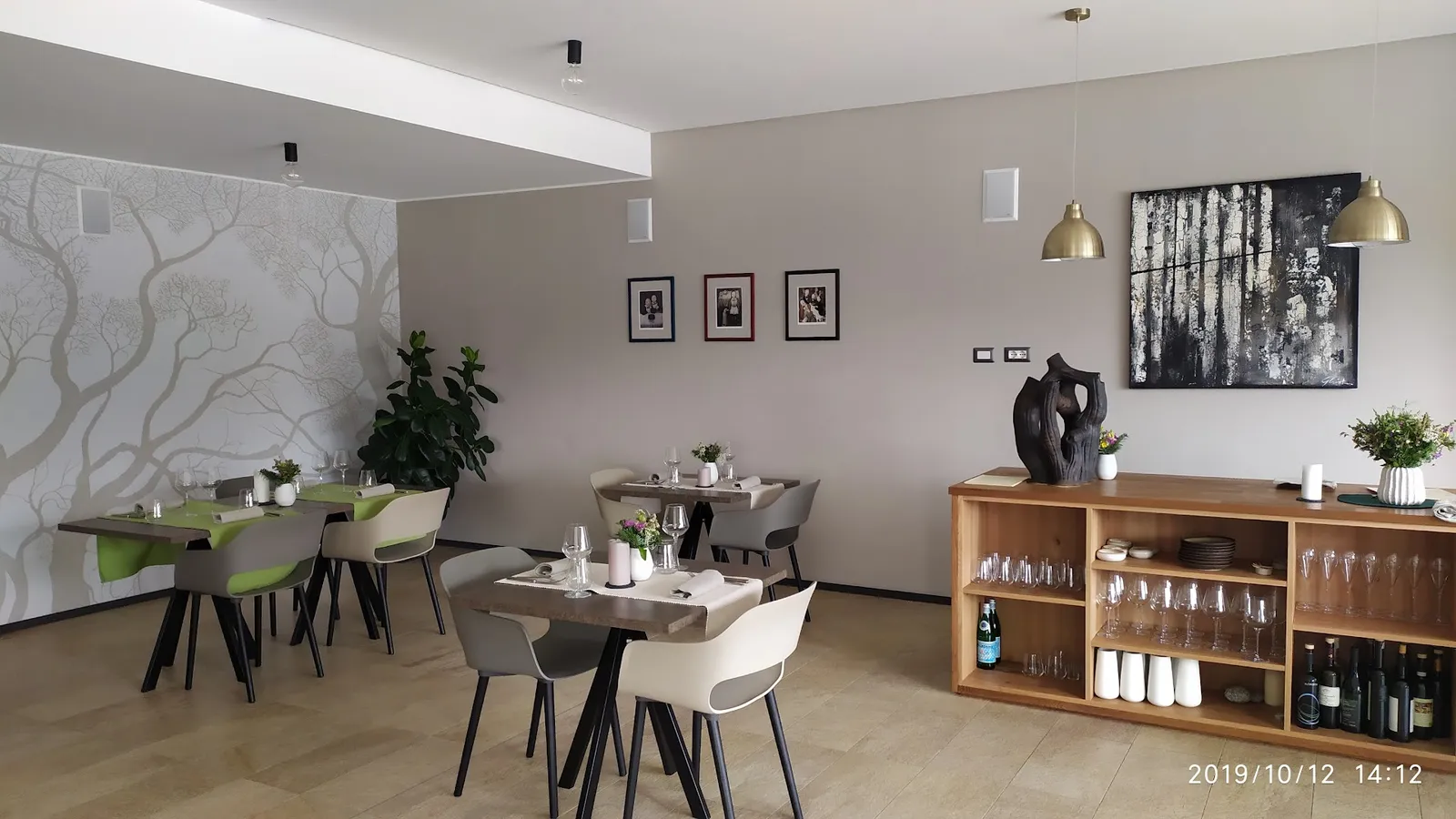
The story
Nestled in the hills of Cavallasca, Habitat is a Michelin Green Star restaurant where chef Mirko Gatti’s cuisine revolves around one core ingredient: surprise. As “Where The Foodies Go” described it, this is “a complete experience of flavors, combinations, pairings, and techniques.” Dishes like river snails with miso and wild garlic, pike marinated with ants, and fermented catfish liver with quince showcase a kitchen deeply invested in fermentation and foraging.
The meal progresses from savory to sweet—smoked butter with pineapple herb, fermented wild boar belly, and a dessert of blackcurrant oil and amasake, capped by a beeswax canelé. An intimate, rustic hideaway earning a 4.6-star rating, Habitat makes each course a quiet revelation. For those ready to surrender to the unexpected, the evening lingers long after the last bite.
Synthesised by AI from every creator’s review. First reviewed 2024.
Most-loved dishes
AI summary of what 12 dish mentions say about the food
The canelé con cera d’api, with its beeswax-infused custard, steals the show, earning rapturous praise. Overall, reviewers describe the food as a warm, artful surprise, blending rustic comfort with refined technique.
“Small canelés wrapped in beeswax. The canelé is the typical dessert of Bordeaux — we tried canelés when we were in Bordeaux. But this one is covered in beeswax. Apart from the fact that the canelé alone was made very well — pure buttery, caramel-like — the addition of beeswax gives it that particular chewiness and obviously the flavor of honey. It's a bomb, a great conclusion.”
What creators say
1 creator has covered Habitat. Most active: Where The Foodies Go
Habitat is one of the best dinners we've had in recent times — a complete experience of flavors, combinations, pairings, and techniques, where the main ingredient of chef Mirko Gatti's cuisine is surprise, and even if you're less adventurous, you should trust us and come because it's truly good.
Dishes mentioned
Lumache di Fiume al Miso con Aglio Orsino
These river snails are first cooked in a koji wine, then lacquered almost caramelized in miso, and accompanied by the vegetal part — in this case wild garlic that was picked just these days. You'll find both the leaves, which are grilled and preserved, and then a cream of wild garlic on top. I'm already smelling the embers and the wild garlic, which is very delicate, and I expect a ton of umami because I heard about koji — that powder that's actually micro-fungi used for saccharifying rice, which then becomes sake. These snails also passed through miso made from soy. How can you describe umami? Soy sauce, parmesan, tomato — or more generally everything you can't categorize as sweet, salty, sour, or bitter. Let's eat. There are so many flavors in this spoonful: umami confirmed, also a slight spicy, herby taste. It's a lake flavor. I'm sorry I can't eat 6 kg of these snails. And now the best part is I can do the 'scarpetta' with this bread lacquered with smoked butter. Look how it flakes! If there was still a note missing to close the circle of this dish, it was the smoky note — now we have the smoke too, so it feels like I'm eating snails roasted on a skewer over a campfire by the lake.
Baffa di Luccio Marinata con Formiche
This is a pike cheek marinated under salt and pine. Then, to let the liquid come out, it's left in the air. On top there are preserved elderberry sprouts and an acidic pesto made with fermented turnips and ants on a twig. There's also a magnolia flower accompanied by a sliver of yellow peas, a pesto made with the flower's pistil, and the very first acacia flowers — very sweet. I leave you a 'combuccia' this time, made with birch: we collect the sap, which is very sugary — there's only about 10 days a year for that — and we also add some birch bark, which is a bit more earthy, otherwise the flavor would be too sweet. This tiny piece of fish already offers a lot of talking points: 'you're eating aged fish' — because this was hung in the air to dry — 'fish should only be eaten fresh', not true. 'You're eating ants, you eat them, I'll eat lasagna.' I'm saying all of these so if you don't like it, amen. If you trust us when we say the porchetta sandwich is good, maybe trust us when we say try these things, because maybe a world opens up. The famous acidic pesto Sara talked about does its job — you get that hit of acidity, the formic acid of the ants tastes like lemon but it's not lemon, a lemony hit but powerful, which goes great with this fish that was also seasoned with pine. You can taste a balsamic note. The meat is very compact, it dried and aged, so it becomes something else — it resists a bit under the teeth and then flakes. We love acacia flowers — you find them two weeks a year, so when they're around we load up and prepare them at home. Magnolia is less common, so I'm curious about the pairing because we don't normally eat magnolia at home. You can really taste the lemony note of magnolia and it goes great with the acacia, which has these very delicate honey notes. And we accompany everything with the birch 'combuccia' — sweet and earthy, exactly as Sara described it.
Fegato di Siluro Fermentato con Mela Cotogna
This is catfish liver put under salt, fermented for a long time, lacquered with a sauce made from the liver itself and two or three different sorrels. So there's an immediate umami bomb. On top there's some lacto-fermented quince grated like lemon, and then we put watercress that cleanses the palate and gives a slightly mustardy note. The chef already said everything in this bite — it contains the whole philosophy of Habitat. It's beautiful, this ability to work with all parts of the catfish. The chef is right when he says the first hit is umami, but it's also wonderful with the acidic part of the quince, and then the ferrous note of the liver, and the watercress on top cleanses your mouth. This dish is extraordinary. And another stylistic signature of this restaurant is that when the course arrives, you're sorry you only had one bite.
Lattume di Trota con Cinghiale e Funghi Fermentati
This is a broth made with fermented mushrooms and algae, inside which you'll find trout milt — not treated. Then you have the crunchy part, given by both wood ear mushrooms and Tokyo turnip. You'll also find the slightly fattier part, which is wild boar jowl, and the vegetal part: horsetail and a different type of wild garlic. I suggest not eating it individually but together — it will be an explosion of flavors. This time it's not a 'combuccia' but a fermented juice made with whey and lemon verbena. Here we're going to the core: fish spermatic sacs. We've talked about this several times — many people might find it strange, but many others, especially in southern Italy like Sicily, it's totally normal to eat milt, which is the tuna's spermatic sac. Tell us if it's normal in other parts of Italy — maybe Sardinia. It's not even salty, it's the first time I've tried it, especially with the boar, mushrooms, and horsetail which should be a bit bitter if I remember correctly. Habitat is a bit crazy, fantastic. Let's start with the most brothy thing to get it out of the way: the trout spermatic sac is good. It's slightly fishy, an earthy part that actually goes well with all the other ingredients here. The texture under the teeth is really like a sweetbread almost. And then together with the boar — I would never have thought to put it with trout, but the two things go well together. Then there's this Japanese turnip that adds earth on earth, the mushrooms and the mushroom broth help — if the broth wasn't also fermented, so there's a bit of an acidic push. But everything together works. It's a really difficult dish both to make and to describe — I don't know if I managed it, because this would need a whole video just to talk about it. I'm ecstatic.
Anatra Selvatica con Shoyu e Rosa Canina
The protagonist of this course is wild duck — both wild and aquatic. The skin is made into a sort of crunchy chip. Then we use everything that isn't the breast: the thighs, the legs, and the wing. We accompany it with a shoyu, which is a fermented paste, with this beautiful big mushroom — saltón ton, usually they're a bit smaller, this one is fabulous. We return to a 'combuccia' made with a raw material we use a lot: rosehip — delicate, acidic, and also fruity. A 100% duck sandwich — I've never eaten that before. What looks like a wafer is actually the crunchy skin. It's delicious. Together you have the crunchiness of the skin, the duck flavor is very clear, and then the saltiness and that umami of the soy — pure poetry.