The story
Tucked away in Villaggio Mosè, Favarese is a pastry shop that proves tradition can travel. Creator Salvo Guarneri drove three hours from Palermo just to taste their Easter lamb pastry, calling it exceptional. Made with a traditional recipe, the pastry uses fifty percent less sugar than the Palermitan version and features handmade wool curls for an authentic finish. It's a local spot that prioritizes craft over trend, earning a modest 3.5-star rating for its straightforward, time-honored approach.
For those willing to venture off the beaten path, Favarese offers a slice of Sicilian Easter tradition that feels both rare and genuine. Guarneri’s pilgrimage underscores its pull: this isn’t a tourist stop but a destination for pastry purists. With delivery available and a focus on traditional offerings, it's a quiet standout for anyone seeking an unfussy, well-executed dolce.
Synthesised by AI from every creator’s review. First reviewed 2026.
Most-loved dishes
AI summary of what 1 dish mentions say about the food
At Favarese, the standout Agnello pasquale earns raves for its tender, herbaceous depth. The overall vibe is one of rustic, sun-drenched Sicilian warmth.
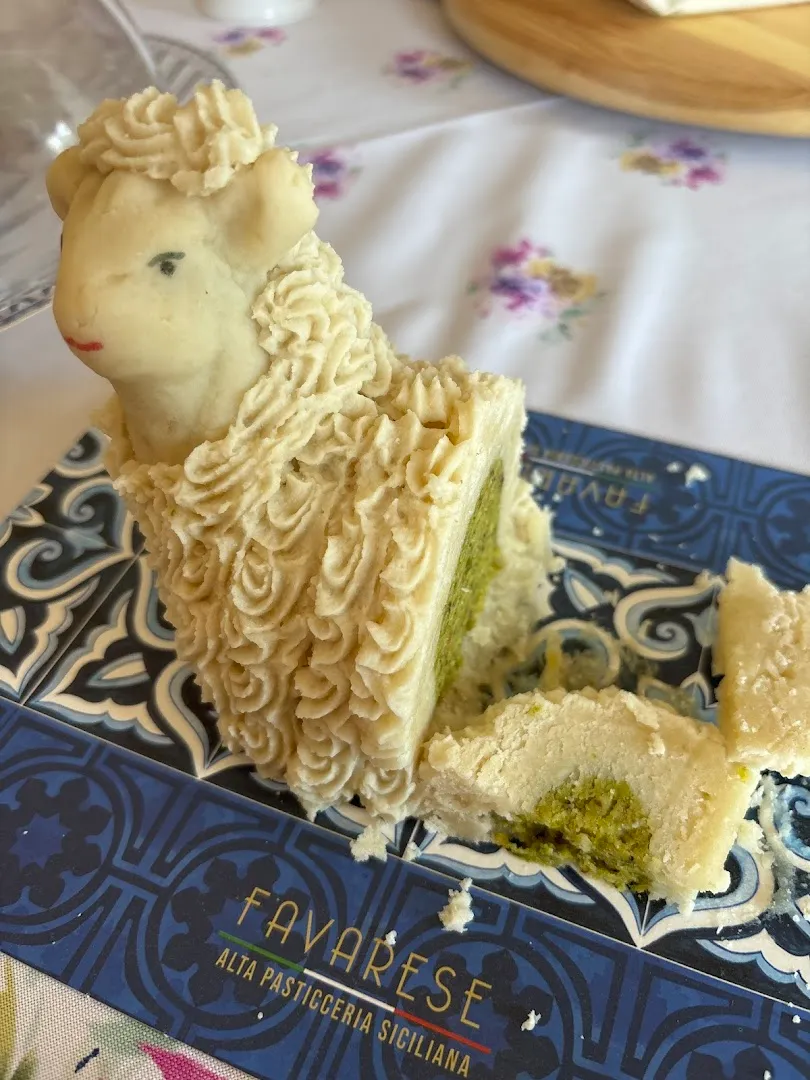
“This Easter lamb is a work of art. The nuns at the Collegio di Maria in Favara created it over 100 years ago using only local ingredients: almonds, pure pistachio from the Platani Valley, and sugar. The face, eyes, and especially the wool — each curl is handmade. What really got me to drive over 3 hours from Palermo to Favara to try it is the quality. The recipe is ancient, with 50% less sugar than the Palermitan version. When you taste it, the softness of the dough and the delicate flavour make it impossible to stop eating.”
What creators say
1 creator has covered Favarese. Most active: Salvo Guarneri
Favarese makes an exceptional Easter lamb pastry with a traditional recipe, 50% less sugar than the Palermitan version, and handmade wool curls — worth the 3-hour drive from Palermo.
Dishes mentioned
Agnello Pasquale
This Easter lamb is a work of art. The nuns at the Collegio di Maria in Favara created it over 100 years ago using only local ingredients: almonds, pure pistachio from the Platani Valley, and sugar. The face, eyes, and especially the wool — each curl is handmade. What really got me to drive over 3 hours from Palermo to Favara to try it is the quality. The recipe is ancient, with 50% less sugar than the Palermitan version. When you taste it, the softness of the dough and the delicate flavour make it impossible to stop eating.